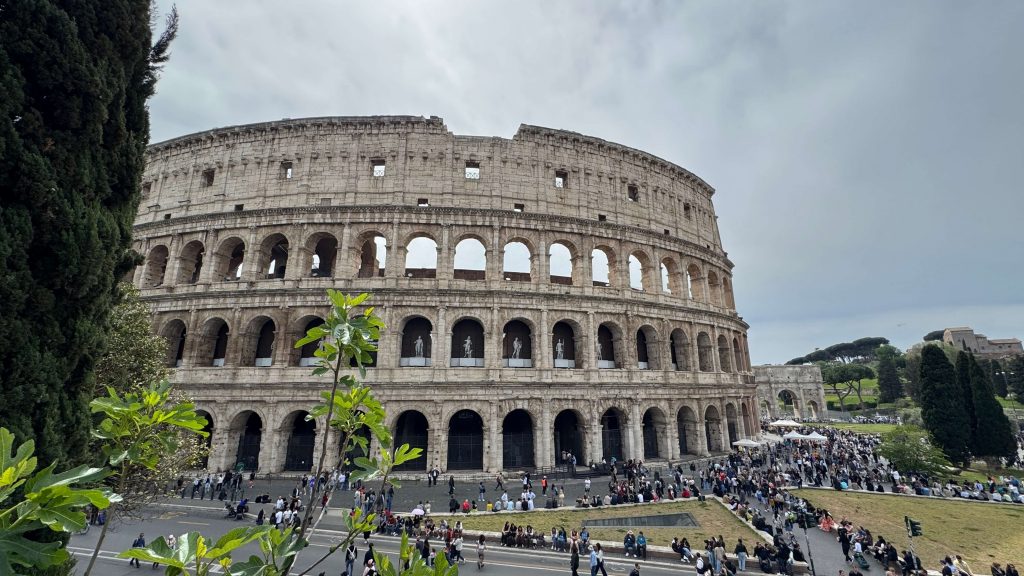
Visiting the Colosseum on a budget might sound impossible at first, especially with Rome being one of the busiest tourist destinations in the world, but with a bit of planning it can actually be an incredibly affordable and memorable day out. During our Rome trip, we explored the Colosseum, Palatine Hill and the Roman Forum and made a whole bunch of mistakes (budget-wise). We found so many ways that we could have saved money I thought I should write a mini Rome travel guide blog with the details.
Top Tips for Visiting the Colosseum on a Budget
Book official tickets in advance
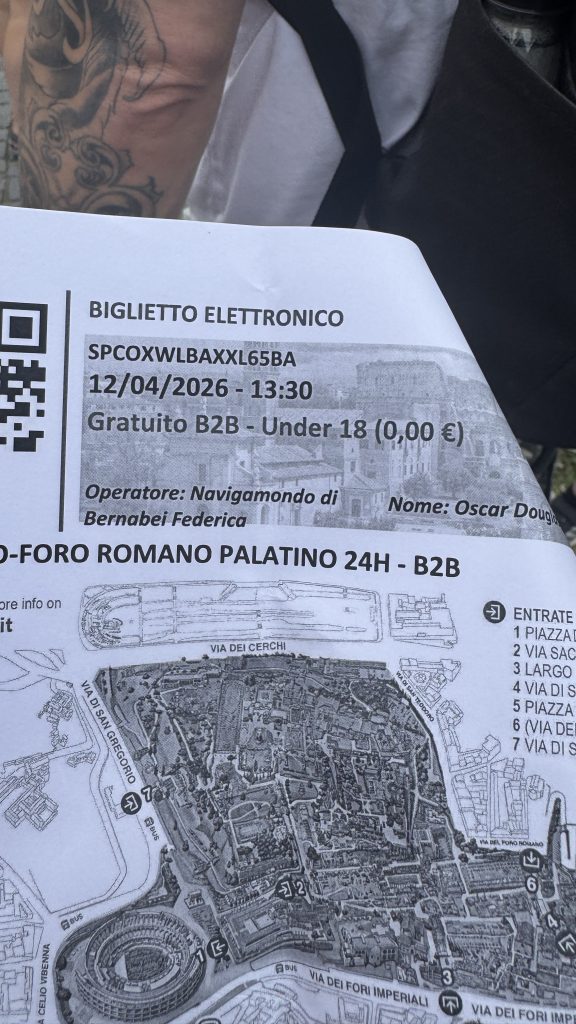
free child ticket!!!
This is probably the most important tip in the entire post.
Ok, so we booked this trip quite last minute – about three and a half weeks beforehand & found to our surprise that the tickets from the official ticket site for the Colosseum sell out about a month beforehand! We were left with no choice but to buy from independent ticket sellers aka ticket touts aka rip-off merchants.
We thought we’d made a good decision to use a big, well-known company called Headout, they have an app, lots of reviews and operate globally. We thought we were buying tickets with a slight mark-up but were happy to have secured the goods. Until we arrived on the day that is…
We went to the meeting point expecting to meet a tour guide or official person but it was just a tiny office off me of the main road opposite the Colosseum where a guy printed out the tickets that he’d purchased from the official website with a face value of €18 for the adults and €0 for the kids – total cost €36 – we had paid, wait for it… £114.56 – a markup of £81!!! Lesson learned!
Take snacks and drinks with you when visiting the Colosseum
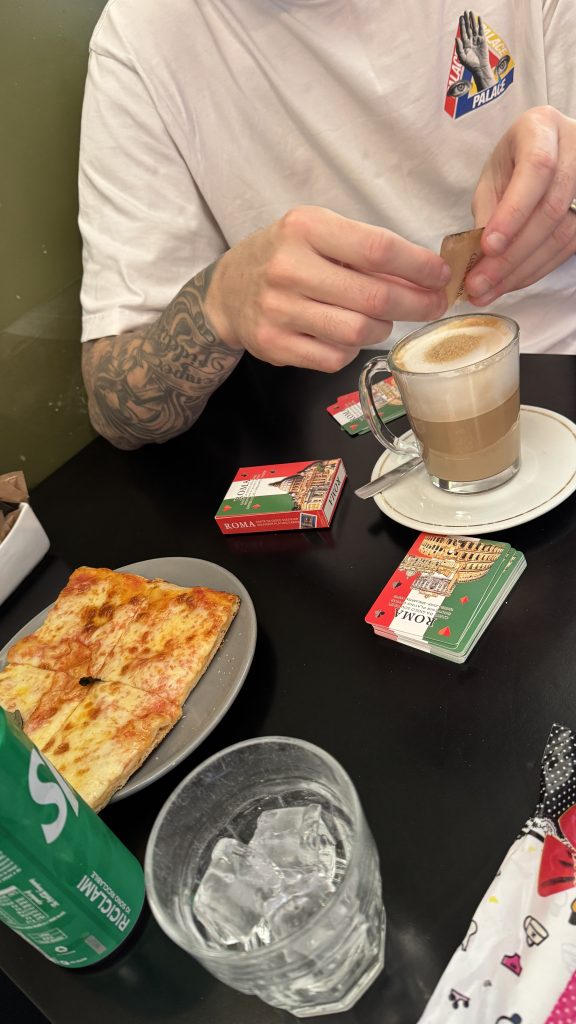
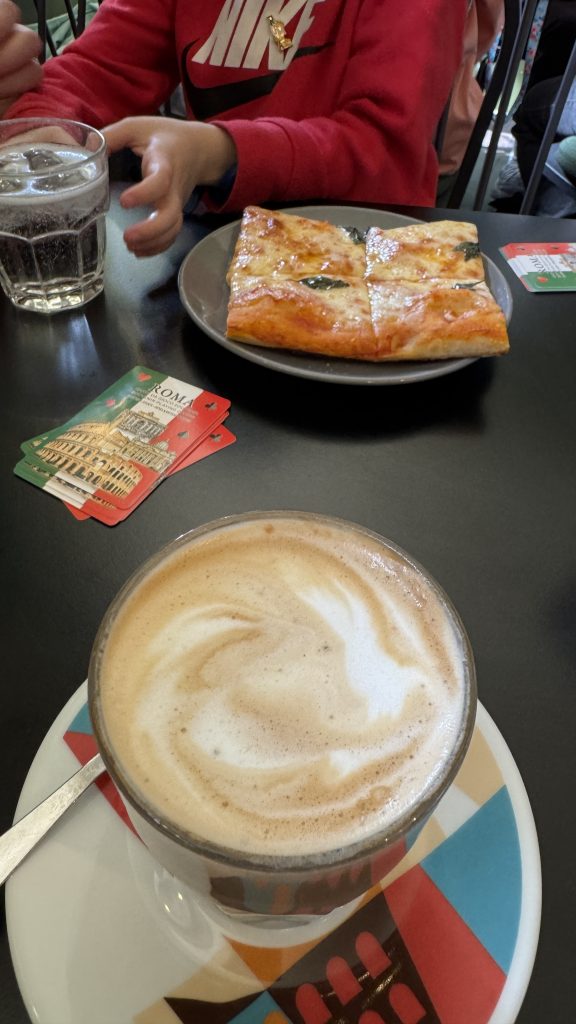
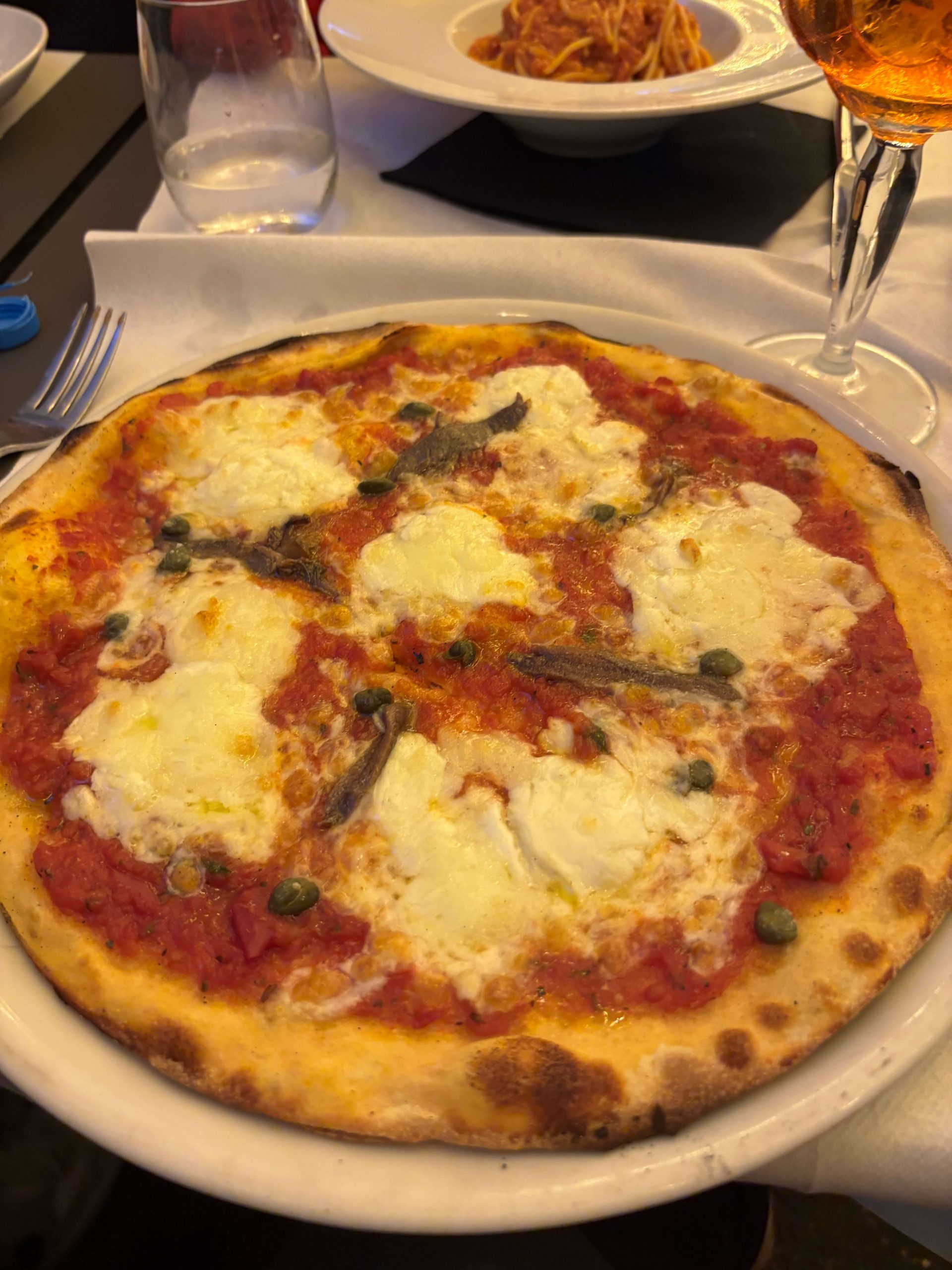
One of the easiest ways to accidentally spend a fortune in Rome is buying food and drinks directly outside tourist attractions. We learnt this lesson when we arrived far too early for our timed ticket and had some time to waste. As we had walked a long way to get there and knew we had plenty of steps ahead of us, we decided to grab a piece of pizza and a coffee in one of the cafes with a great view of the Colosseum.
I don’t regret doing this as how often do you actually go to places like the Colosseum so we wanted to soak it all in and the coffees were actually very good (plus we got to use their toilets which were in quite short supply in the immediate area).
However, the cafes and kiosks immediately around the Colosseum are incredibly expensive compared to places even five or ten minutes away. So if budget is the main focus when you are visiting the Colosseum then bring your own snacks and drinks and avoid the local cafes and bars.
We were surprised to find that there werent any food or drinks stalls or stands once you entered the Colosseum, i thought they’d take every opportunity to flog expensive water bottles and ice creams but all we could find was a few vending machines and hot drinks machines in Palatine Hill.
Top tip, freeze a bottle of water overnight if your hotel has a freezer compartment because Rome gets HOT.
Wear comfy shoes
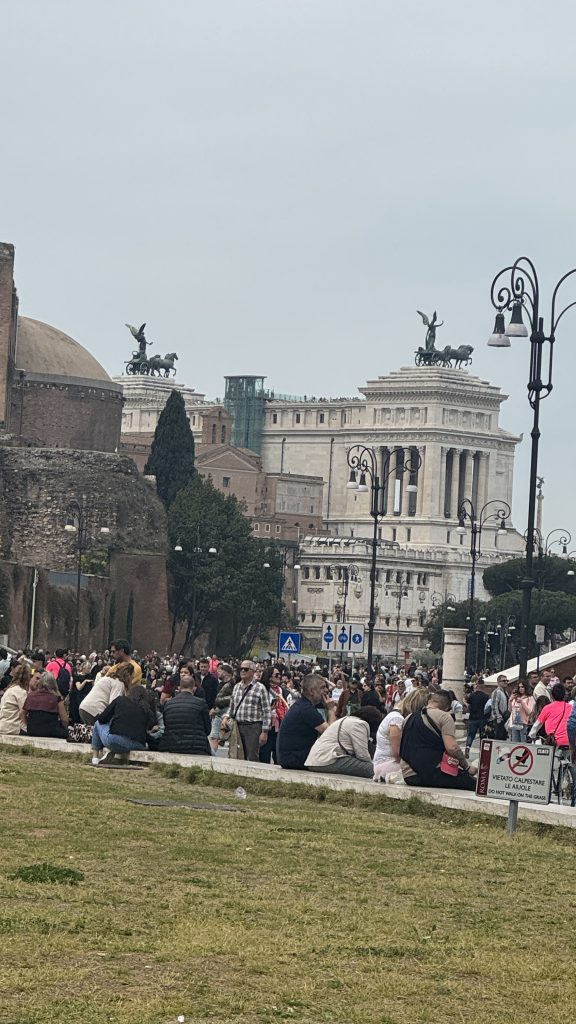
This sounds obvious but the walking around the Roman Forum and Palatine Hill is no joke. I lived in my trainers for our whole break as my feet wouldn’t have lasted otherwise!
There are uneven ancient stones, steep inclines, dusty pathways and lots of steps. Stylish sandals might look great in the photos but your feet will absolutely hate you afterwards. We did over 22.5k steps on the day we were visiting the Colosseum so bear your footwear choices in mind.
Bring your ID
When visiting the Colosseum there are strict security processes, a little bit airport-like with a bag scan and ID check. Don’t bring a large bag and don’t overpack. The security checks were much quicker than at the Vatican but still worth bearing in mind and definitely don’t forget your ID as they check that the names on your tickets match and without photo ID you won’t be allowed in.
The Arena isn’t included on the standard ticket
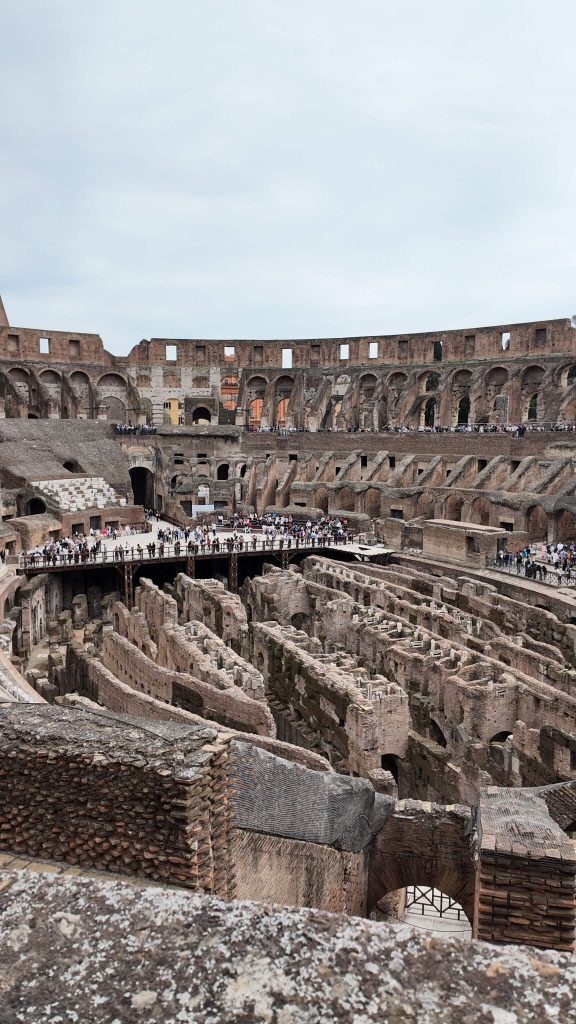
It’s worth noting that you won’t be permitted access inside the arena on the standard ticket, so if walking around there is a must, be sure to get the upgraded version. We didn’t mind too much as you have a great view of the arena from above and there is so much walking to be done on this trip that I’m not sure the kids would have been up for more!
Exploring the Colosseum
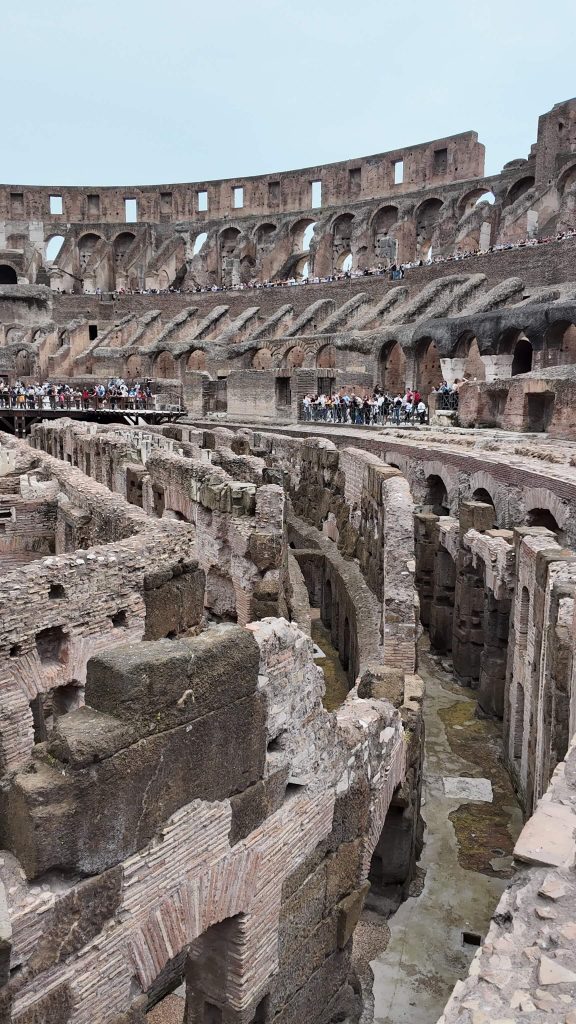
Walking inside the Colosseum genuinely feels surreal.
The scale of it is hard to explain until you’re standing inside, imagining the gladiator battles, roaring crowds and events that once took place there thousands of years ago.
Some of my favourite parts included:
- Looking down into the underground chambers
- Seeing the huge curved seating areas
- The incredible arches and stonework
- The panoramic views across Rome from the upper sections
Even if you are not massively into history, it is impossible not to appreciate the engineering and atmosphere of the place.
Walking up Palatine Hill
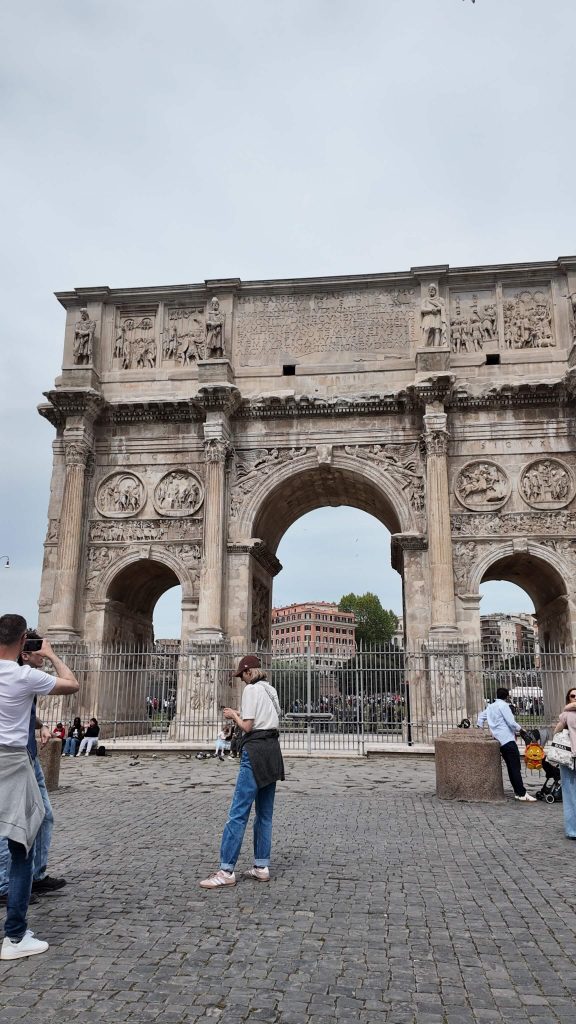
After leaving the Colosseum, we headed up to Palatine Hill, which ended up being one of my favourite parts of the whole day.
It felt noticeably calmer and greener than the busy areas around the Colosseum and the views over Rome were stunning.
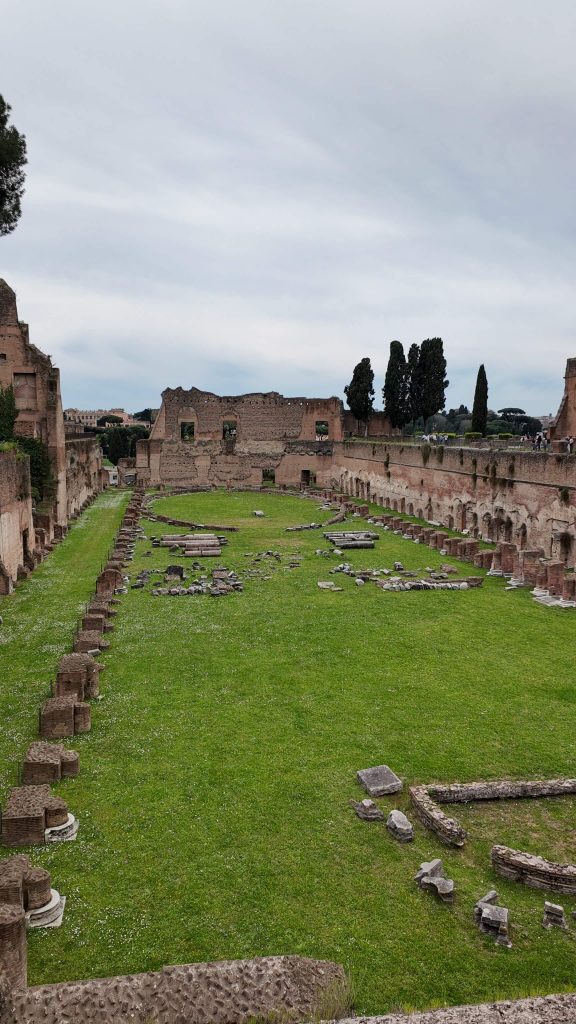
According to Roman mythology, this is the area where Romulus founded Rome, and you can wander through ancient palace ruins, gardens and viewpoints at your own pace. The kids were tired, so we went quite a direct route through the centre, heading towards the Roman Forum but you could easily spend two or three hours weaving in and out the trees and taking in the spectacular views and historic ruins.
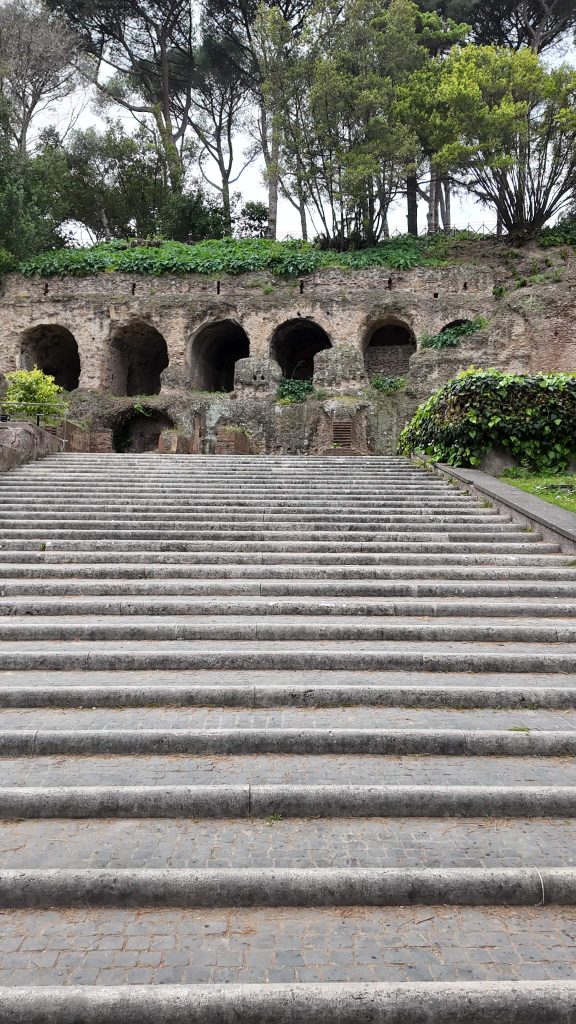
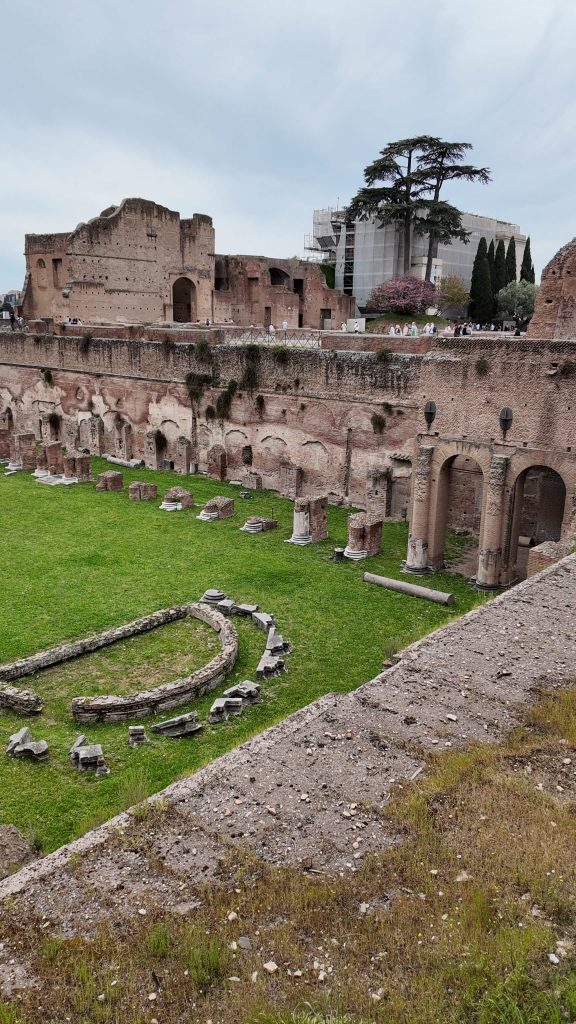
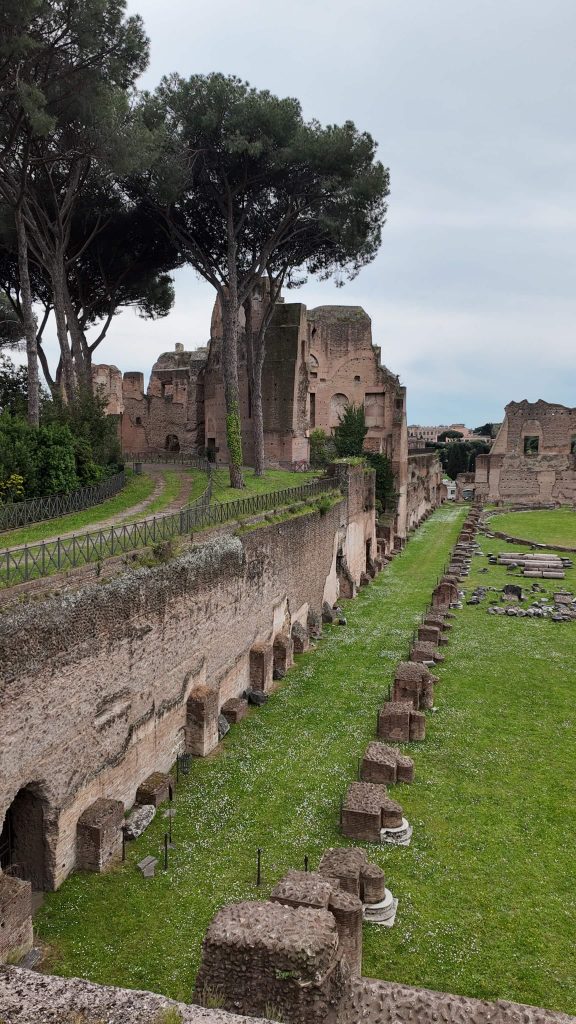
It also gives you some absolutely incredible photo opportunities looking back across the city.
Exploring the Roman Forum
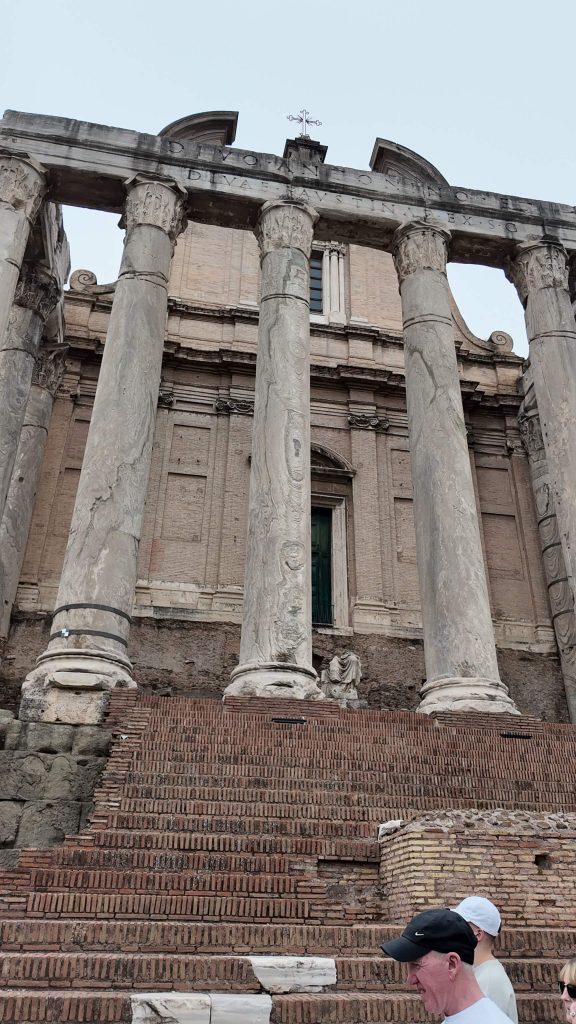
The Roman Forum is enormous and much bigger than I expected. After the awe-inspiring Colosseum and beautiful grounds of Palantine Hill I thought we must have seen it all, then you wander into the Roman Rorum and there are literally hundreds of ancient stones, statues and carvings at every turn.
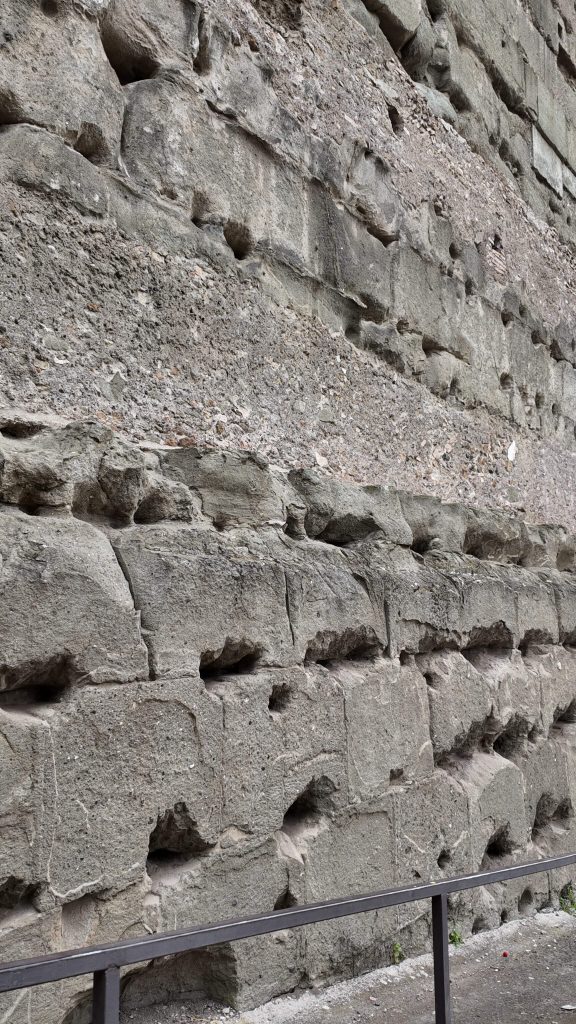
This was essentially the heart of Ancient Rome, where political speeches, markets, ceremonies and daily life took place.
Everywhere you look there are crumbling columns, ancient pathways and ruins layered on top of each other.
Some highlights included:
- Temple of Saturn
- Arch of Titus
- Temple of Antoninus and Faustina
- The ancient Roman roads still visible underfoot
It is the sort of place where you constantly stop every few minutes to take photos because there is history absolutely everywhere.
Walking Route to the Colosseum from The Tribune Hotel
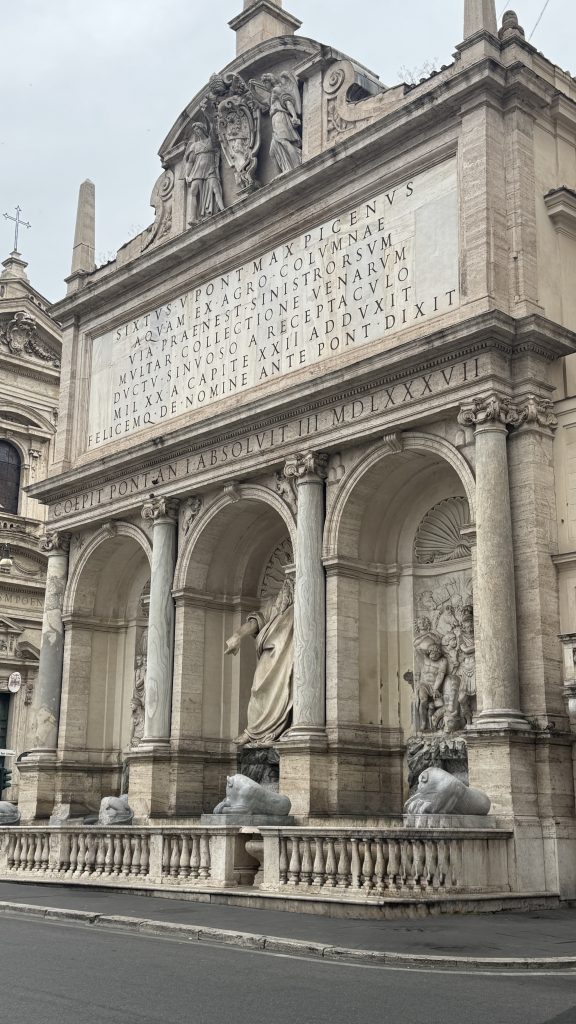
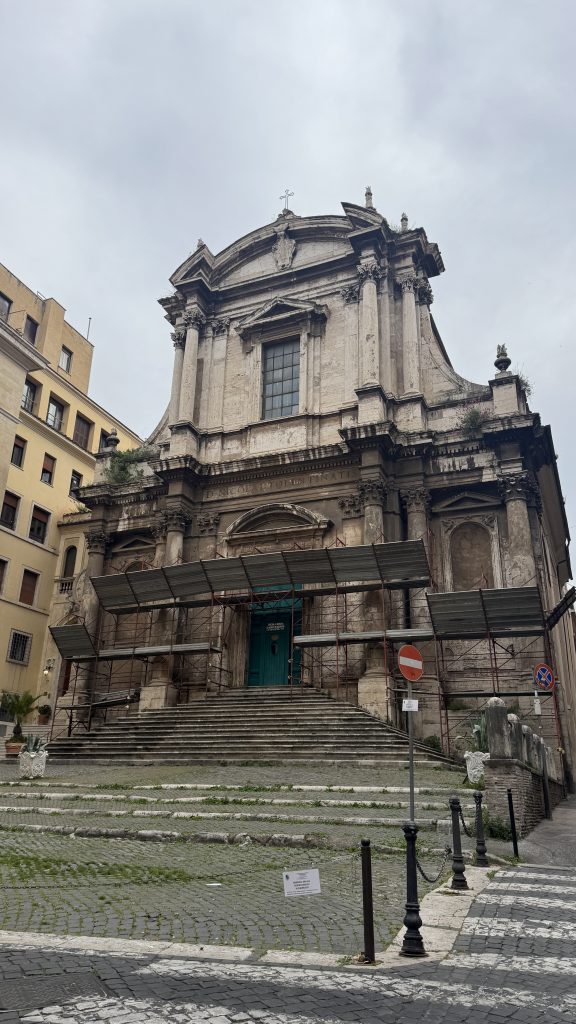
After finishing at the Roman Forum we looped back towards the hotel through central Rome.
If you still have energy left, this is a lovely opportunity to stop for gelato, wander through side streets or detour towards landmarks like the Trevi Fountain or Spanish Steps on the way back.
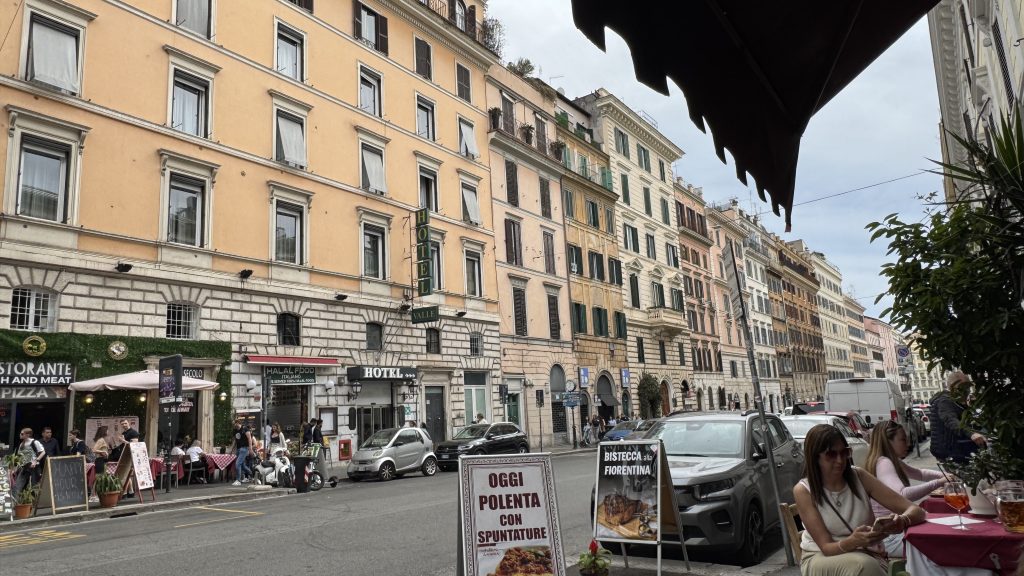
We stopped for a beer and an aperol as our feet needed a rest and found the most friendly and welcoming bar/restaurant on the main hill and took in the sights and enjoyed lots of people watching before finishing the walk home.
Interesting facts about the Colosseum in Rome
Before visiting the Colosseum, I knew it was impressive, but I did not realise quite how many fascinating stories and bizarre facts were attached to it. The more you learn about the history of the Colosseum, the more incredible it becomes.
Originally known as the Flavian Amphitheatre, or Amphitheatrum Flavium in Latin, the massive amphitheater was commissioned by Emperor Vespasian around AD 72 during the Flavian dynasty. Construction continued under his son, Emperor Titus, with further modifications later added by Vespasian’s other son, Domitian. The name “Colosseum” is believed to come from the colossal bronze statue known as the Colossus of Nero, which once stood nearby close to the site of Domus Aurea, the lavish palace built by Emperor Nero.
Even by modern stadium standards, the Roman Colosseum is astonishing. It remains the largest amphitheater ever built in the Roman world and could hold tens of thousands of Roman citizens, carefully arranged according to social status. The best seats were reserved for Roman emperors and wealthy elites, while ordinary Roman people sat higher up in the seating area. Some sections even had seat numbers carved into the stone, alongside Roman numerals to help visitors find their places.
One of the most surprising facts about the Colosseum in Rome is the engineering. The entire building featured a retractable awning system designed to shield spectators from the sun, while underground tunnels, vertical shafts, trap doors and underground chambers allowed gladiators, scenery and even wild animals to appear dramatically on the arena floor. Looking down into the floor of the Colosseum today, you can still see the remains of these underground systems beneath where the original wooden floor once stood.
The inaugural games of the Colosseum reportedly lasted for around 100 days and included gladiatorial combats, public executions, animal hunts and theatrical performances. Ancient Romans are even believed to have staged mock naval battles there during its earliest years, although historians still debate exactly how these spectacles worked inside the elliptical building.
The Roman people flocked there to watch gladiator battles featuring exotic animals imported from across the empire, including lions, leopards and elephants. The nearby training school known as Ludus Magnus prepared fighters for combat before they entered the arena through underground passageways connected to the Colosseum itself.
The construction of the Colosseum was an enormous undertaking involving huge quantities of travertine stone, with historians estimating that hundreds of thousands of cubic meters of material were used throughout the base area and structure. Much of the labour is thought to have been carried out by Jewish slaves following Rome’s victory in the Jewish War.
Over its years of history, Rome’s Colosseum survived fires, earthquakes, natural disasters and the fall of the Roman Empire. By the Middle Ages and into the 5th century and 6th century, the use of the arena had changed dramatically. The last gladiatorial fights eventually disappeared, followed later by the last animal hunts. Parts of the structure were reused as housing, workshops and even defensive fortifications.
In the 18th century, the Colosseum became more closely protected by the Catholic Church because of its association with Christian martyrs, helping preserve the symbol of Rome that millions visit today. It is now one of the most visited monuments in the world and forms part of a UNESCO World Heritage Site covering the historic centre of Rome and nearby Vatican City.
It is also still hugely influential in popular culture. Films by directors including Ridley Scott have helped introduce new generations to the history of Ancient Rome, using modern special effects to recreate the atmosphere of gladiator fights and ancient Roman times.
Standing inside the Colosseum today, surrounded by so much history, it is hard not to imagine the noise, drama and spectacle that once filled this extraordinary building in the heart of the Eternal City.
Walking from the hotel to the Colosseum
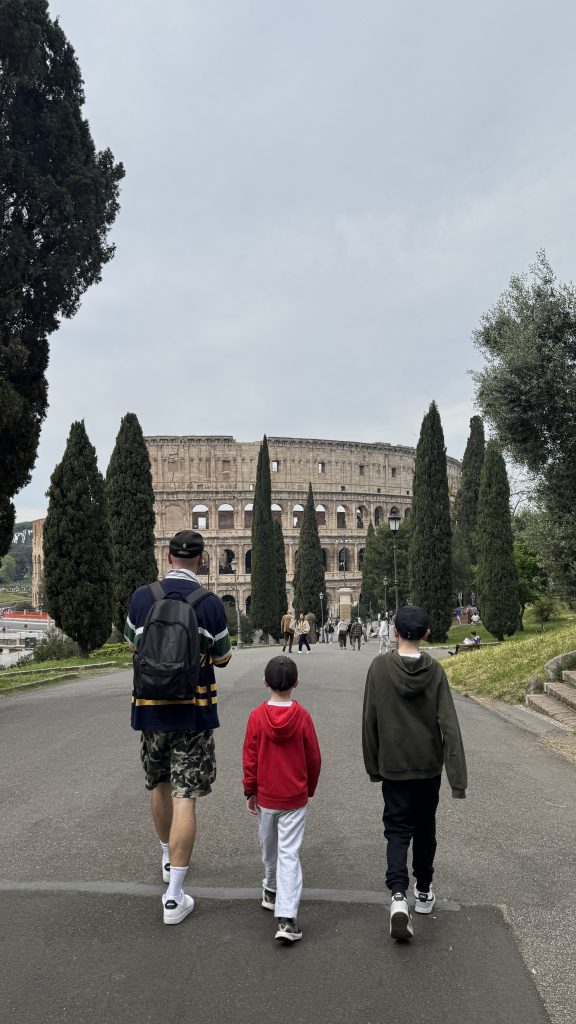
We stayed at the The Tribune Hotel which worked brilliantly for a Rome walking holiday because so much was accessible on foot.
The route to the Colosseum took us through some beautiful streets and gave us chance to see loads of Rome along the way instead of constantly relying on taxis.
Suggested walking route
- Start at The Tribune Hotel
- Walk towards Piazza Barberini
- Continue down Via del Tritone
- Pass towards Altare della Patria
- Head along Via dei Fori Imperiali
- Arrive at the Colosseum
The walk itself becomes part of the experience because Rome constantly feels like an open-air museum.
Visiting the Colosseum on a budget – it can be done!
If you are visiting Rome and trying to keep costs sensible, I honestly think this is one of the best-value sightseeing days you can do.
One reasonably priced ticket gives you access to multiple world-famous historic sites and an entire day of exploring.
With a bit of planning, comfortable shoes, snacks packed in your bag and tickets booked in advance, you can experience some of the most iconic landmarks in the world without spending a fortune.
And for me, that is exactly what bespoke on a budget travel is all about.
Where next?
Read my review of the Amare beach hotel, Ibiza
Read about the Chelsea in Bloom 2026 floral spectacular