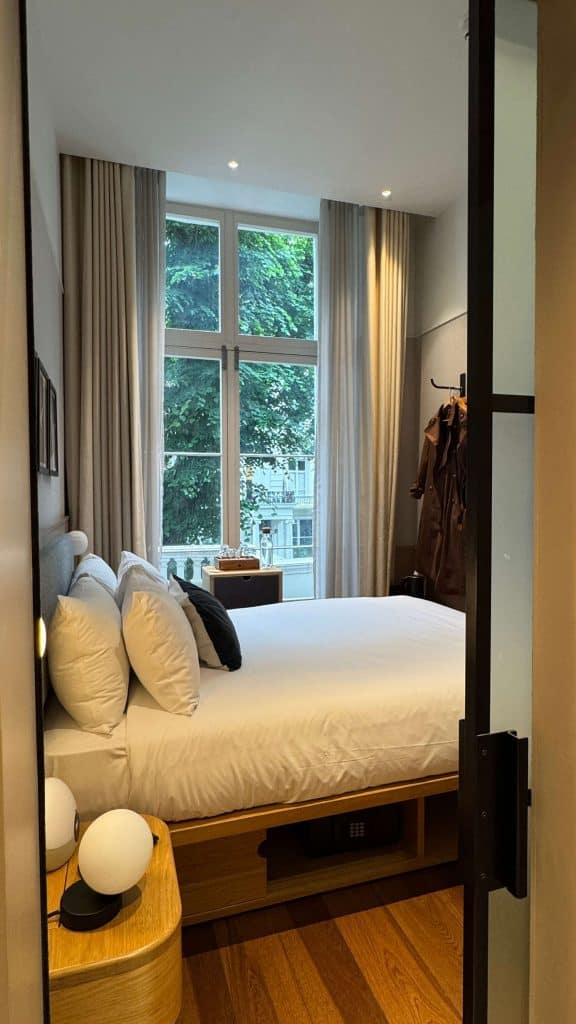
One of the unexpected things I’ve noticed while reviewing hotels over the last couple of years is how often I come home with interiors ideas. They are masters at small room design ideas.
When you’re staying somewhere new every few weeks, you start spotting patterns. Certain hotels feel calm and spacious even when the room itself isn’t particularly large. Others have huge square footage but somehow feel cramped and awkward.
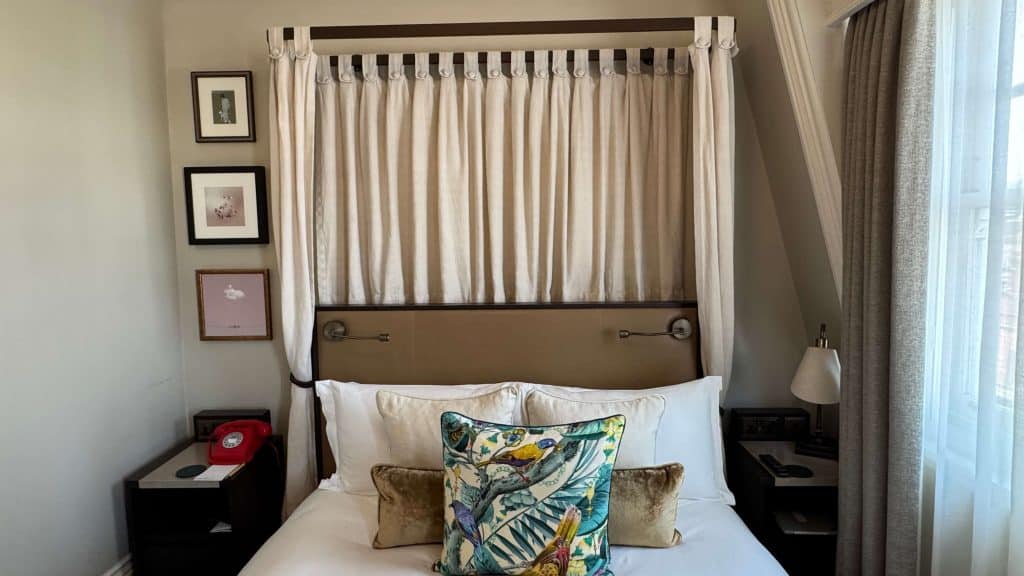
After staying in hotels across London, Lisbon, Rome, Brighton, Malta and Ibiza, I started noticing the same design tricks appearing again and again.
The good news is that most of them don’t require a luxury hotel budget and you can steal the best ideas in your own home so here’s the cheat sheet I’ve pulled together…
Quick answer – The TLDR equivalent for a blog ha ha
Hotels make rooms feel bigger by maximising natural light, keeping furniture off the floor, using multifunctional spaces, creating clear sight lines, adding well-placed mirrors and reducing visual clutter. Many of these small room design ideas can be recreated easily at home without major renovation work.
They make the most of every inch
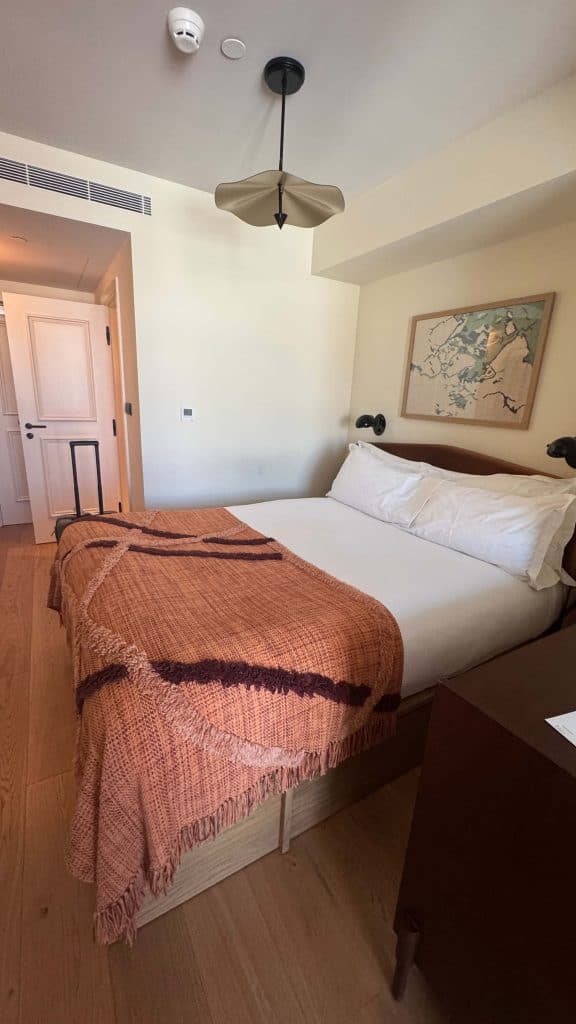
One of the best examples of this was at Locke de Santa Joana in Lisbon.
The studio room wasn’t enormous, but every part of it worked hard.
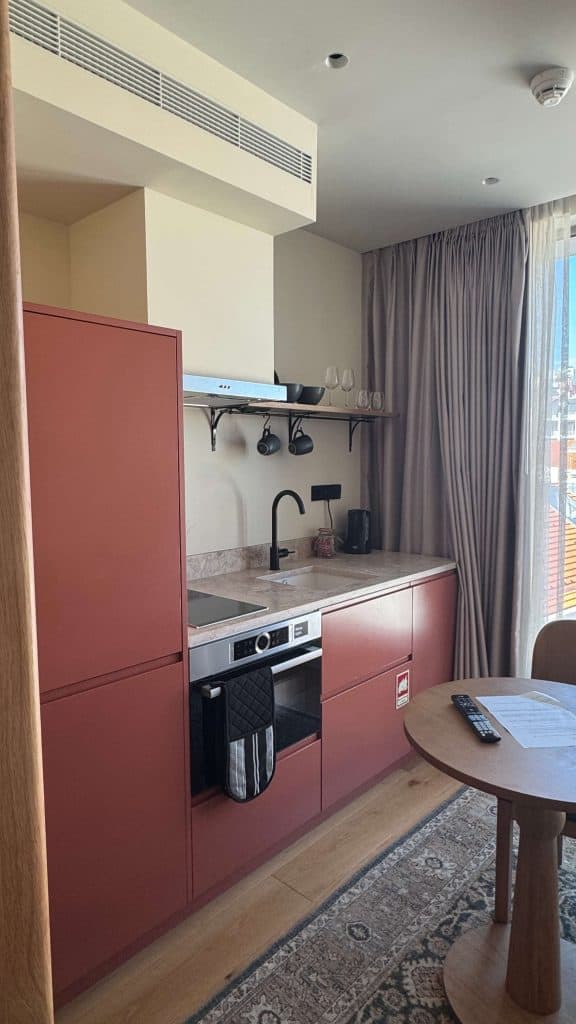
The kitchenette was tucked neatly into its own area, storage was built in rather than added afterwards and the layout flowed naturally from one zone to the next.
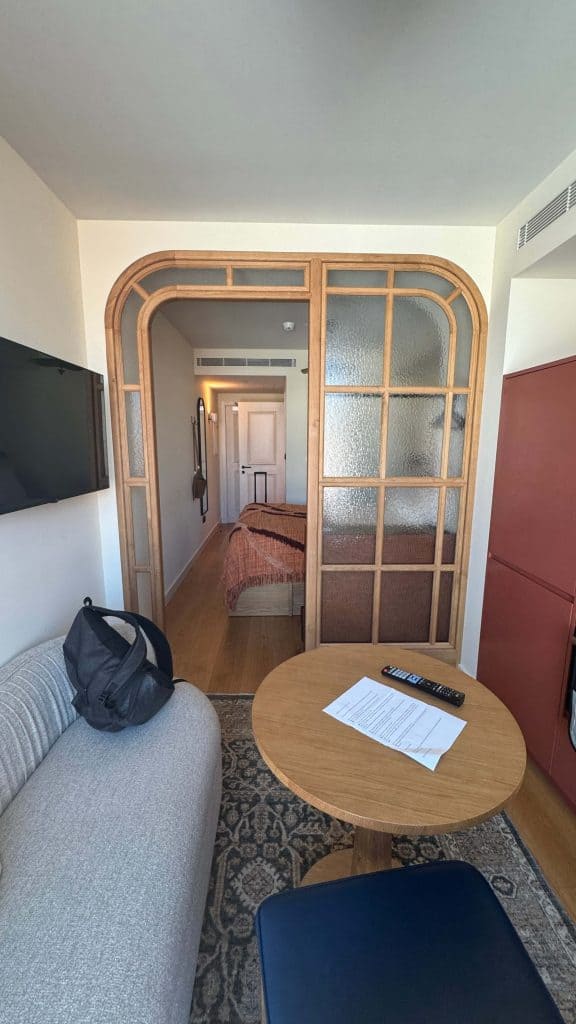
Nothing felt squeezed in. It’s something I see repeatedly in good hotel design and beautiful bedroom styling. Rather than filling a room with furniture, they think carefully about what the room needs to do and then design around that. I loved the clever room divider that zoned the space between the bedroom and kitchen but let light through (important in small spaces) due to the glass tiles. This is such a stealable design tip.
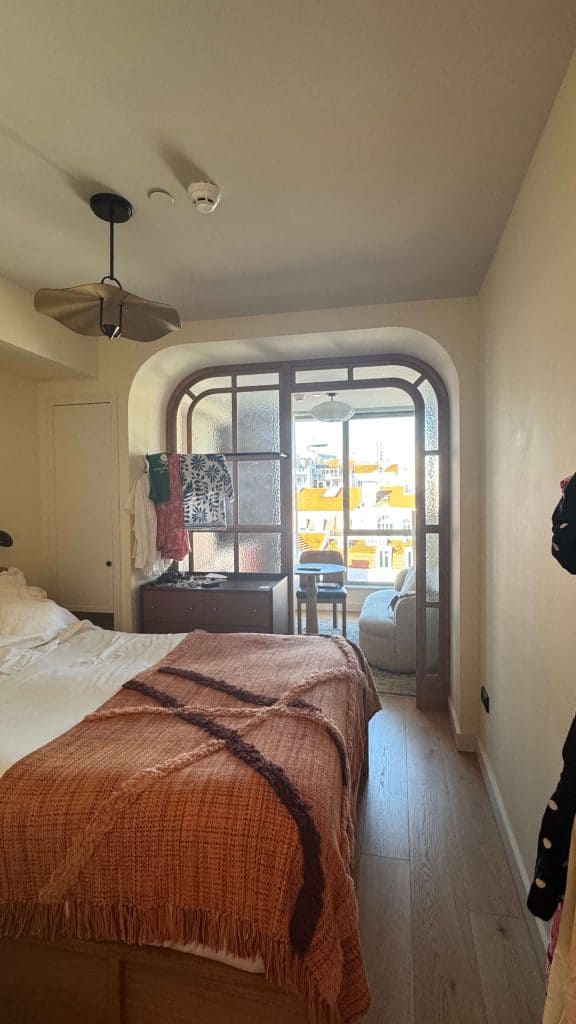
At home, it’s worth asking whether every piece of furniture is earning its place and how can you zone spaces.
Small room design ideas – keep furniture off the floor
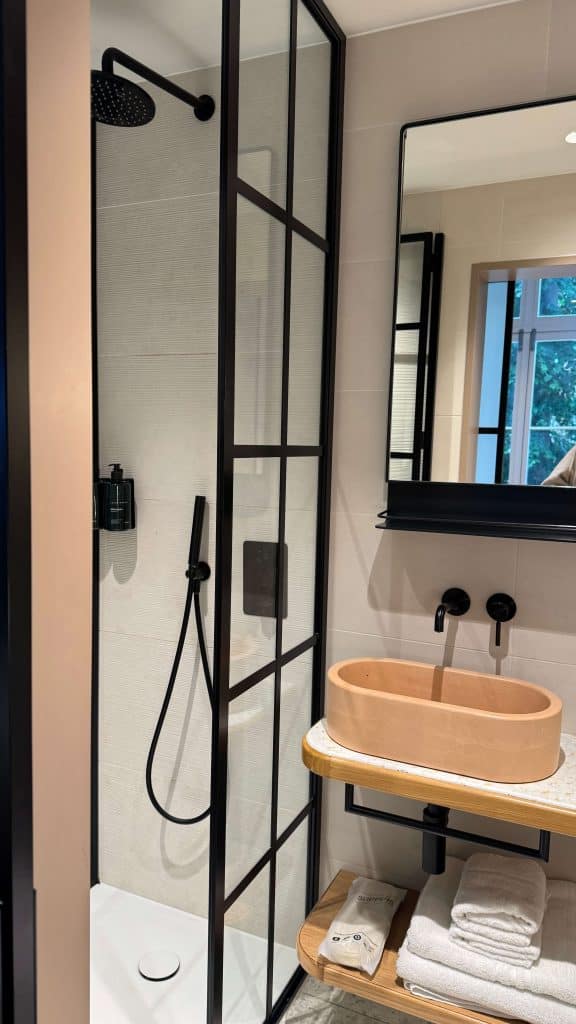
This is something I first noticed years ago in hotel bathrooms but now I spot it everywhere.
Floating vanities, wall-mounted bedside tables and furniture with visible legs all help create a greater sense of space.
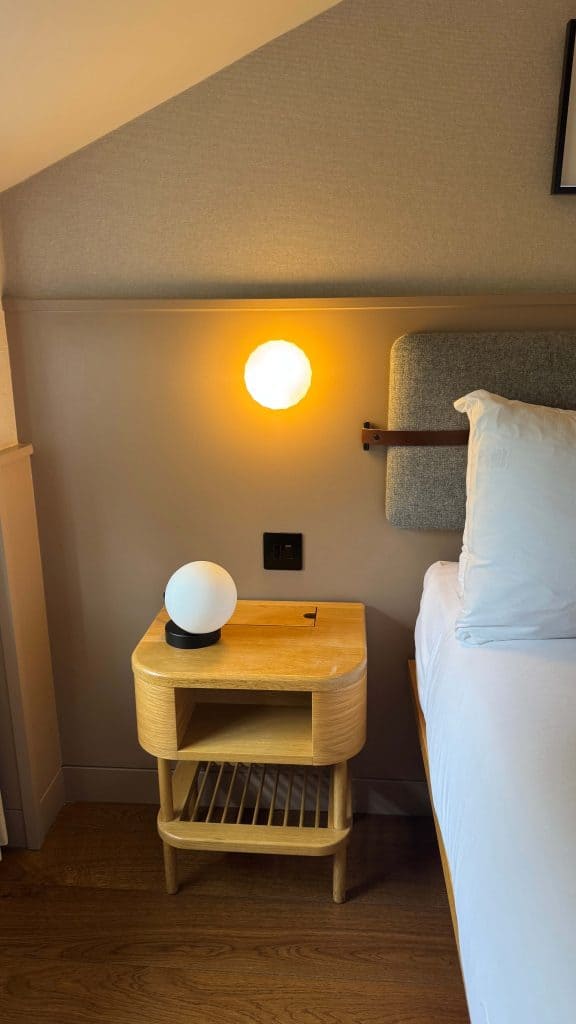
When you can see more floor area, the room automatically feels larger.
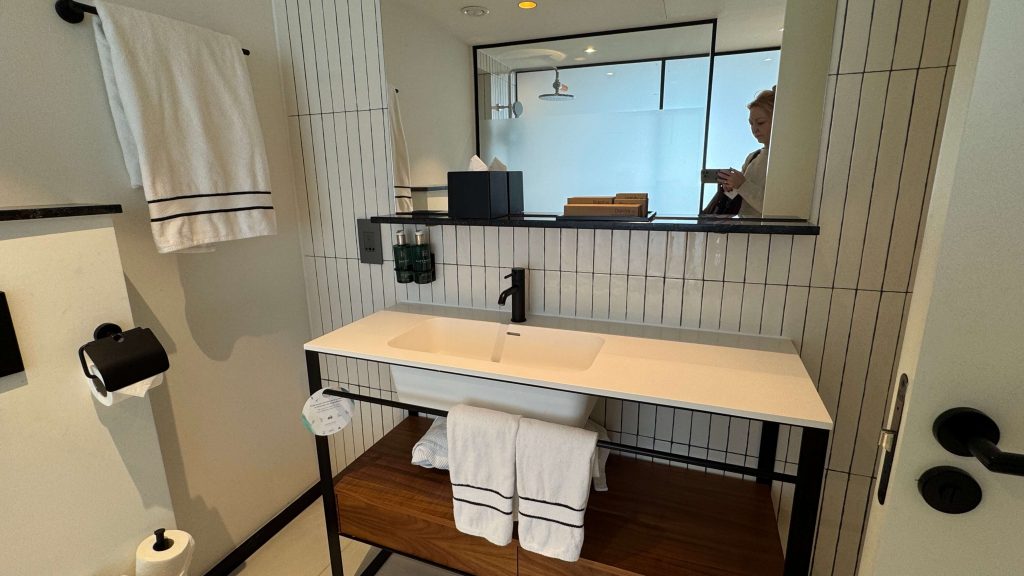
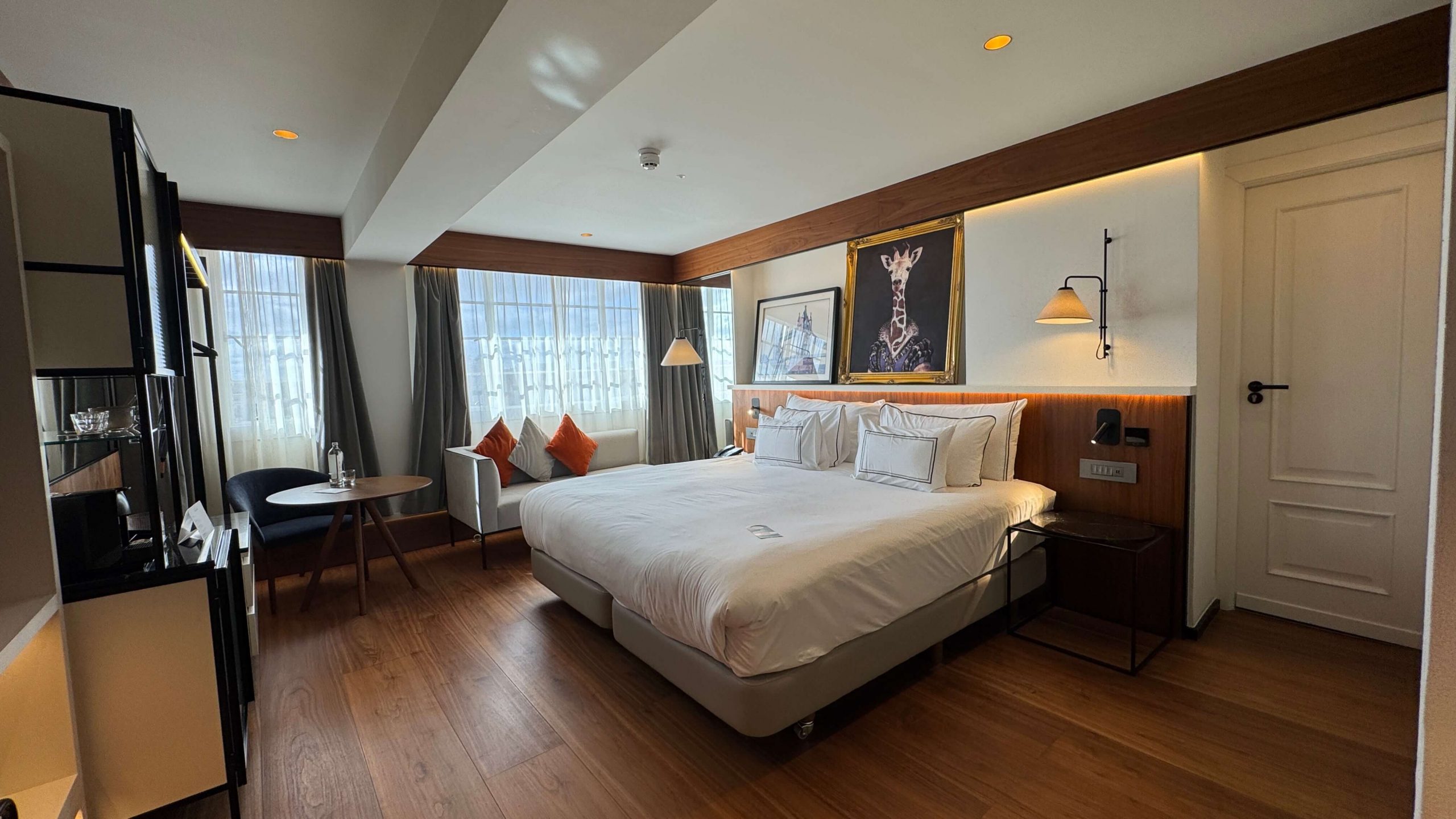
The Inhabit Queens Gardens room did this particularly well. The furniture felt light and airy rather than heavy and bulky as did Melia at the White House (above).
It’s a simple trick but one that makes a surprising difference.
Natural light changes everything
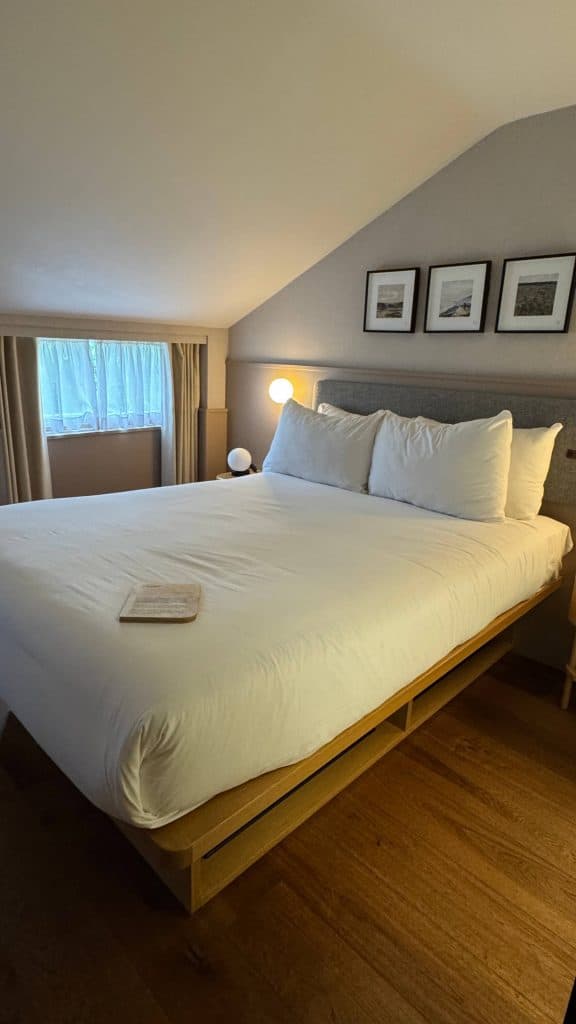
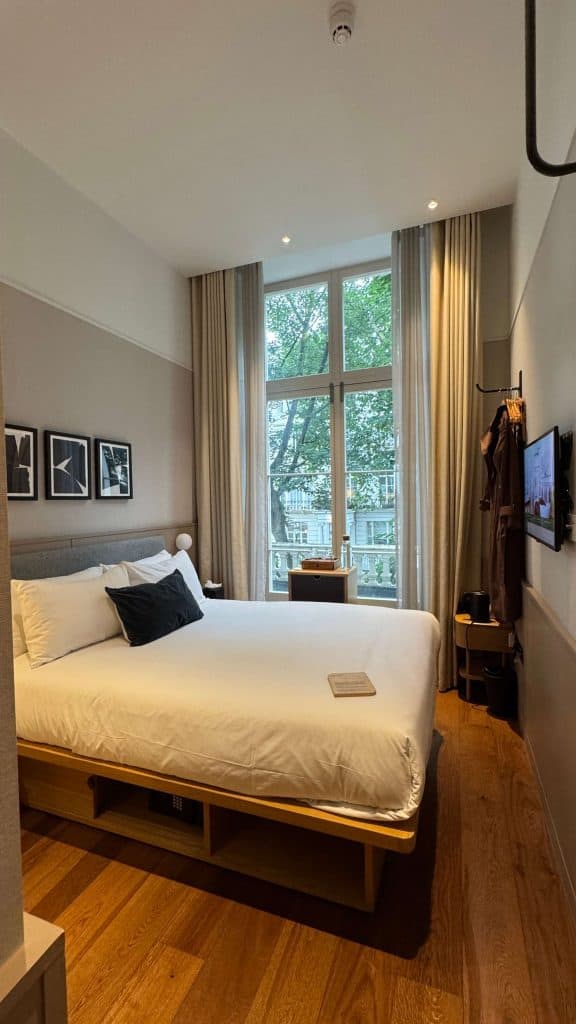
The biggest difference between the first room and second room I was shown at Inhabit Queens Gardens wasn’t the square footage.
It was the light. The first room felt dark and enclosed. The second room had higher ceilings, better natural light and immediately felt far more spacious despite not being dramatically larger.
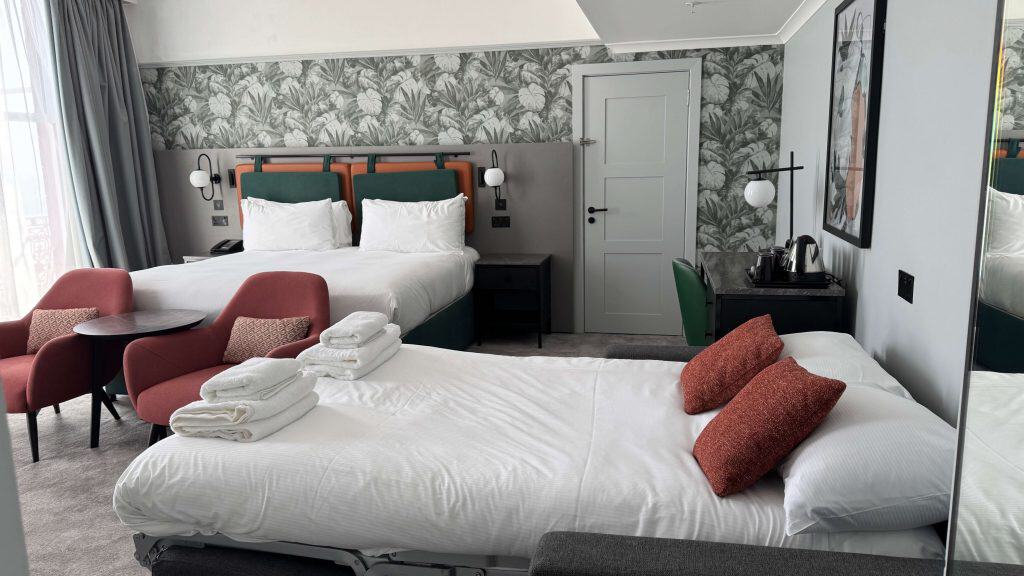
It’s a reminder that before knocking down walls or spending money on extensions, it’s worth looking at how light moves around a room. We loved the super light room at the Hilton Metropole (above) whereas the room at the Grand was beautiful and had much more expensive fittings and fixtures but really missed the natural light (below).

Light colours, mirrors and avoiding bulky window treatments can make a huge difference.
Hotels are masters of reducing visual clutter
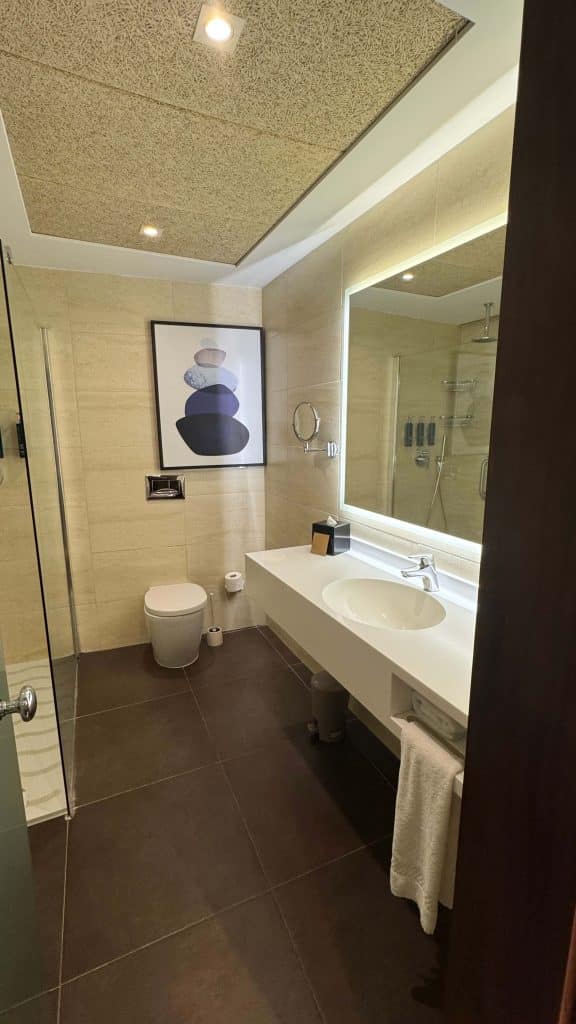
One thing I repeatedly noticed in Lisbon, Rome and London was how little was left out on display. This is something I tried to copy in my recent bathroom renovation.
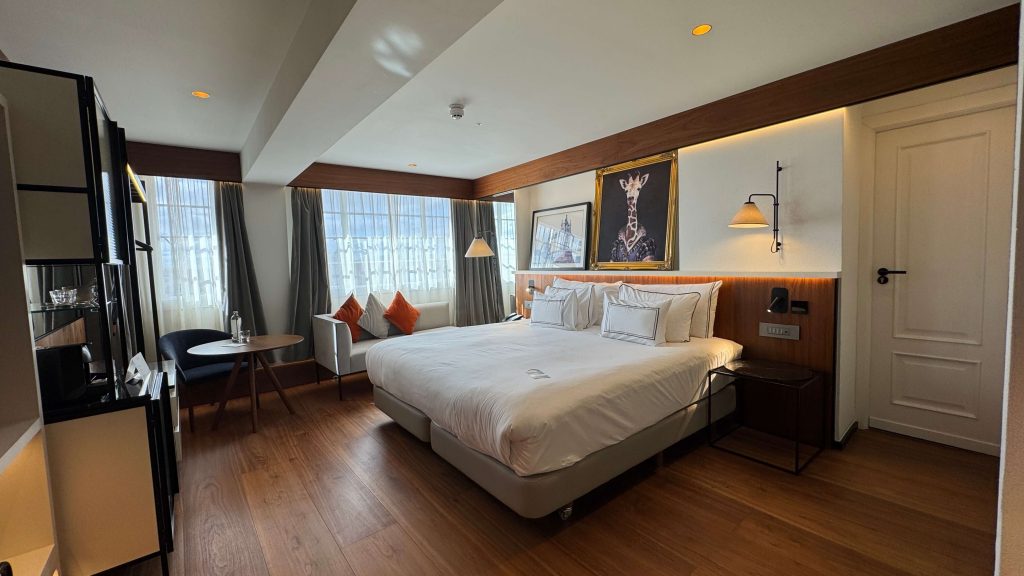
There weren’t piles of cables, paperwork, chargers and everyday clutter competing for attention.
Everything had a home, the secret to home organisation.
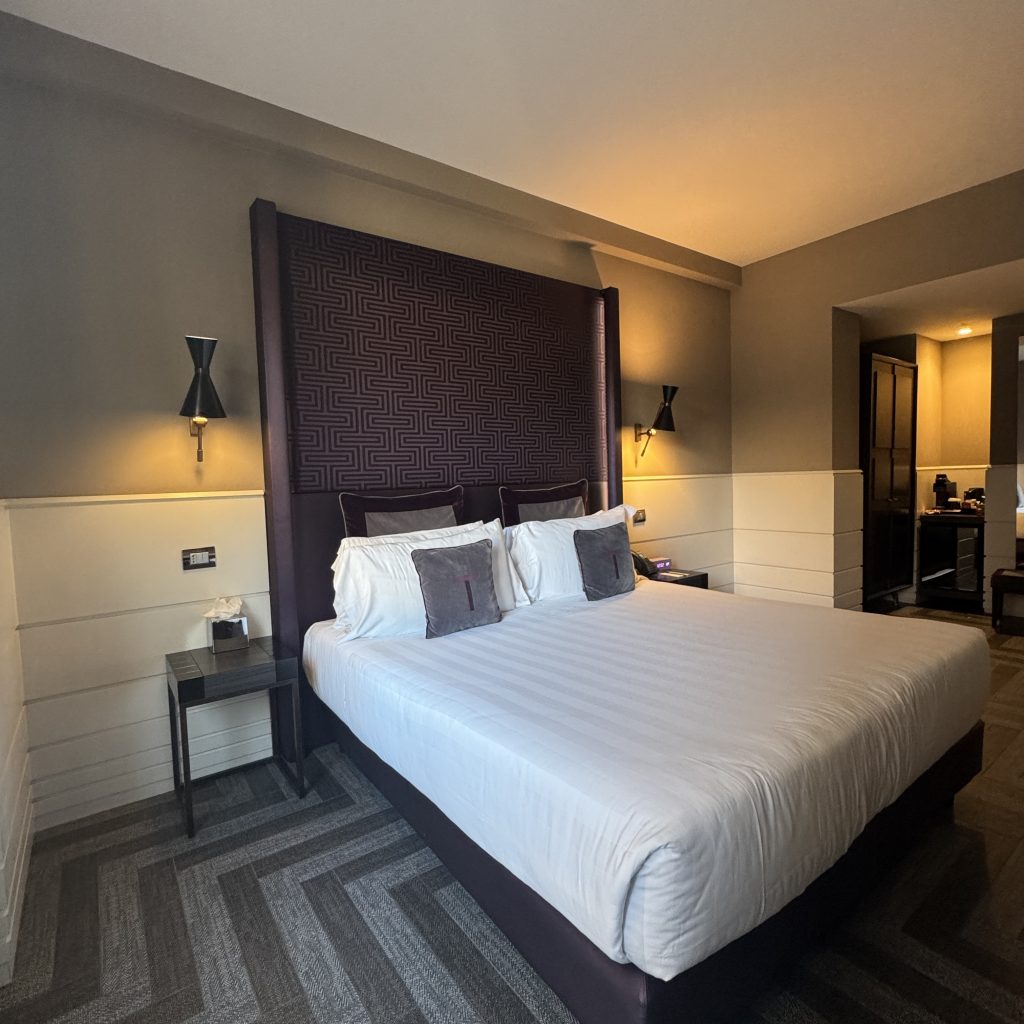
Good hotels create calm by removing visual noise.
It’s something I’m constantly trying to improve at home too. Sometimes making a room feel bigger isn’t about adding anything at all. It’s about removing a few things.
Mirrors are doing more work than you think
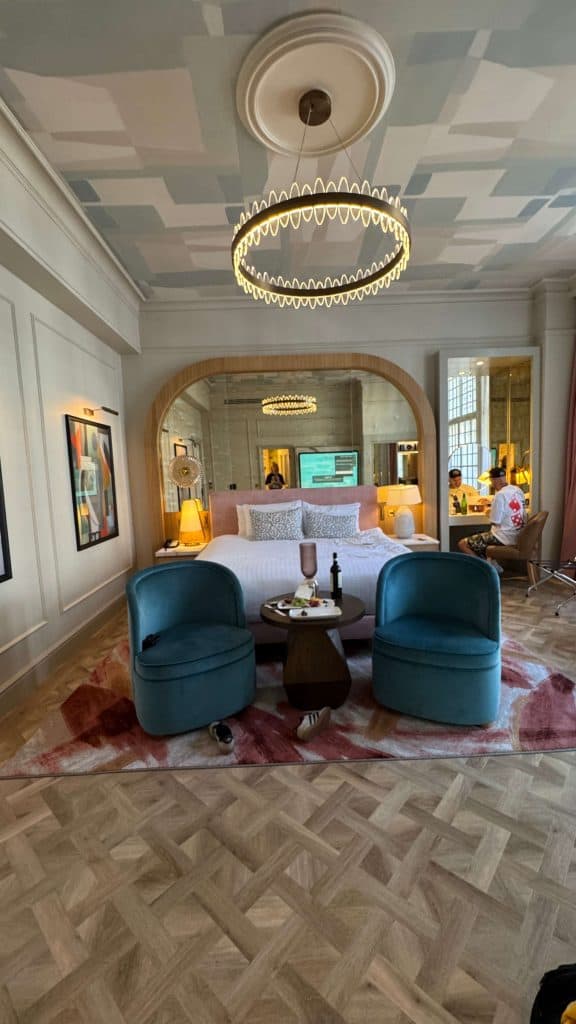
Luxury hotels use mirrors brilliantly. Not just in bathrooms but in bedrooms, hallways and reception spaces.
The Dilly is a great example. Large mirrors help bounce light around the space and make already impressive rooms feel even bigger.
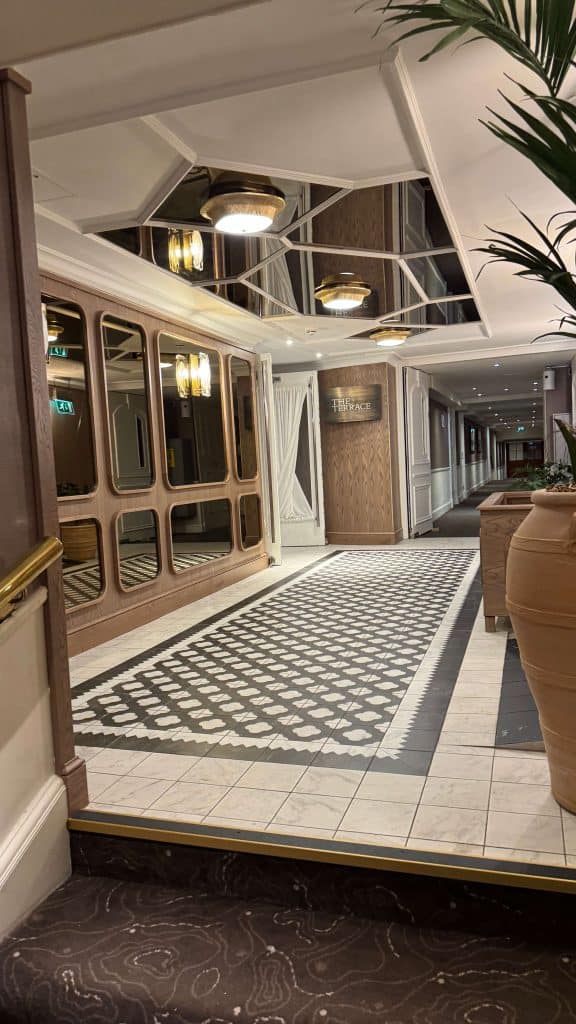
You don’t need a five-star London hotel budget to use the same principle.
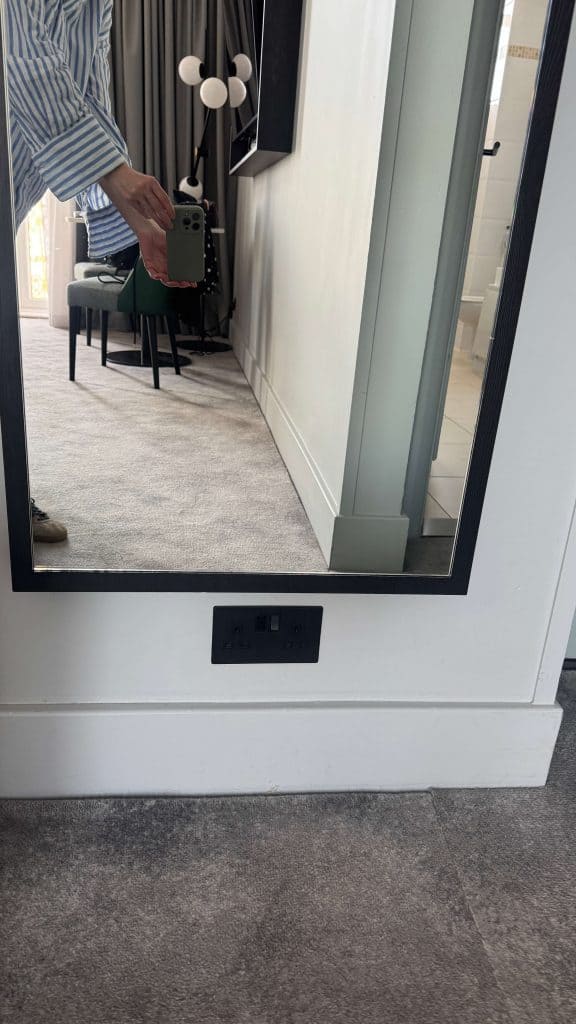
A well-placed mirror opposite a window can completely change how a room feels.
They create clear sight lines
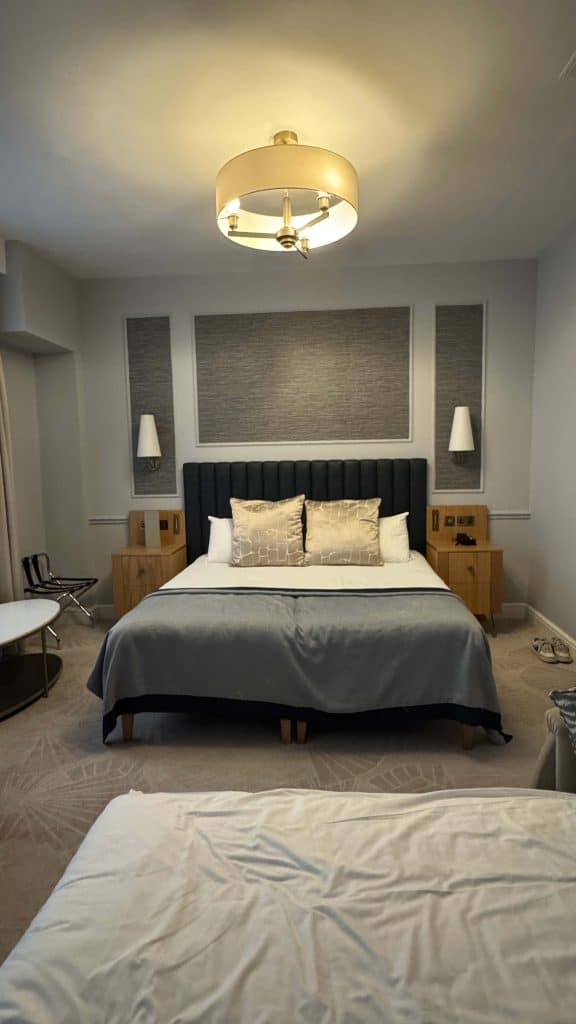
One thing I noticed at the Grand Brighton, Kimpton Fitzroy and Locke de Santa Joana was how easy it was to see across the room.
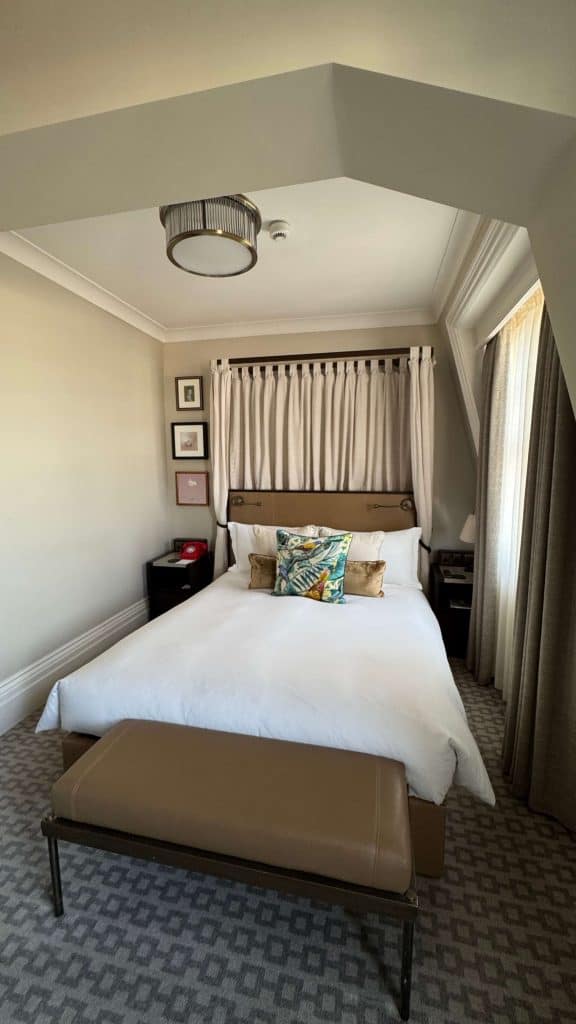
Nothing blocked your eye.
The layout naturally drew your attention towards windows, views or focal points.
At home, oversized furniture pushed into walkways can make rooms feel much smaller than they actually are.
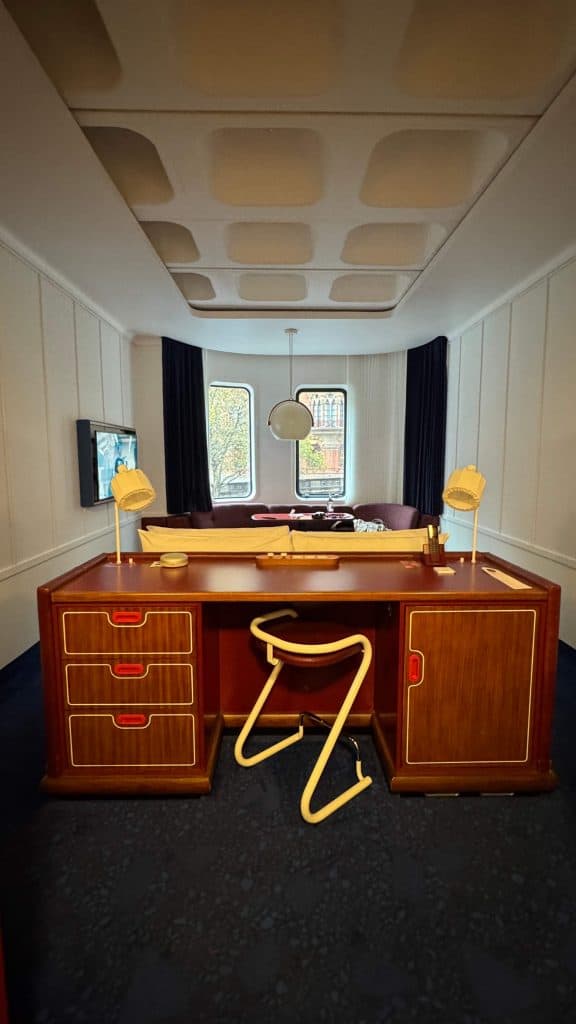
Sometimes simply rearranging a room can create a stronger sense of space.
Good storage disappears into the background
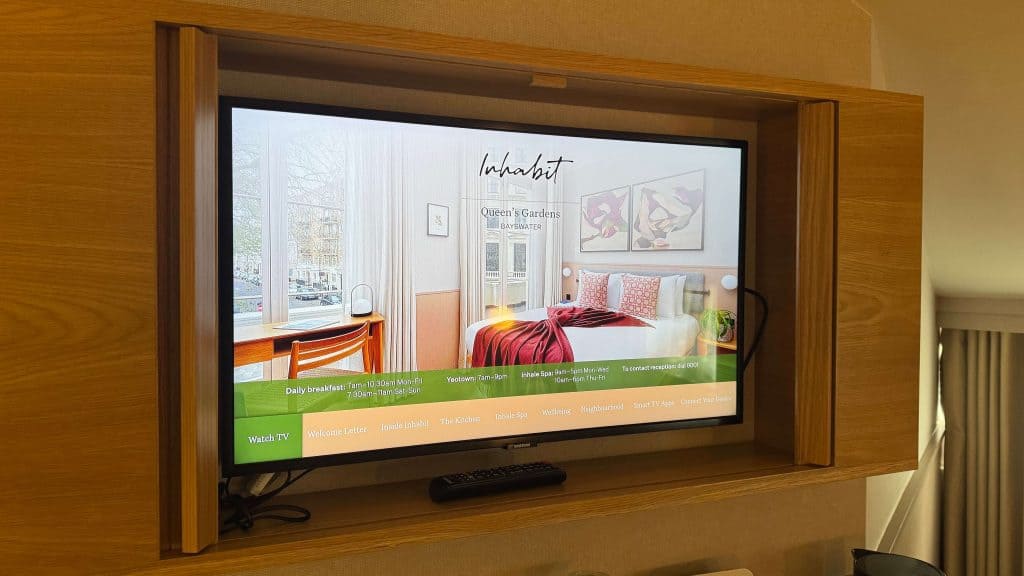
The best storage often isn’t the storage you notice.
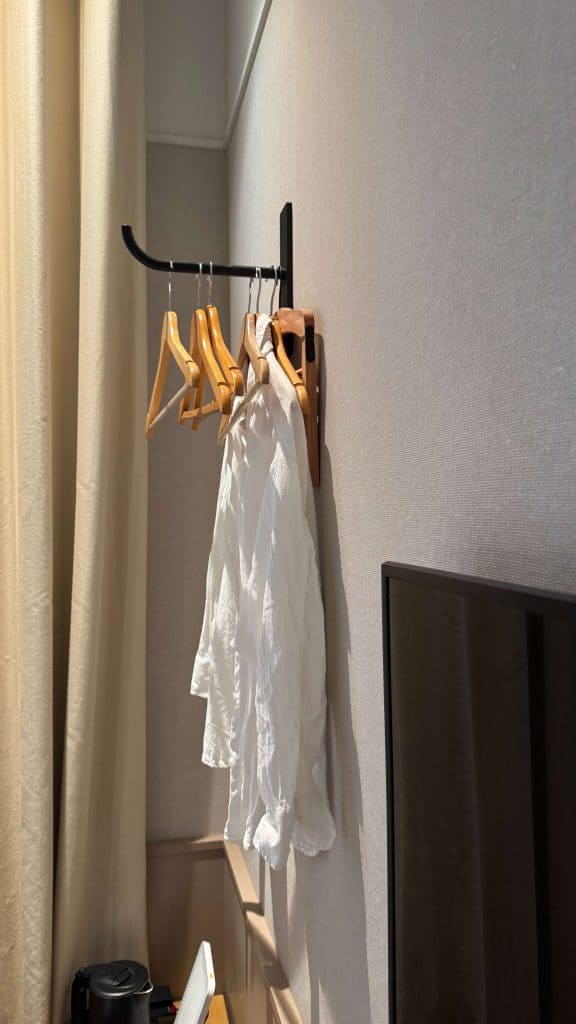
Hotels are brilliant at hiding practical items. Luggage storage, wardrobes, tea stations and mini fridges are often integrated into the design rather than standing out as separate pieces.
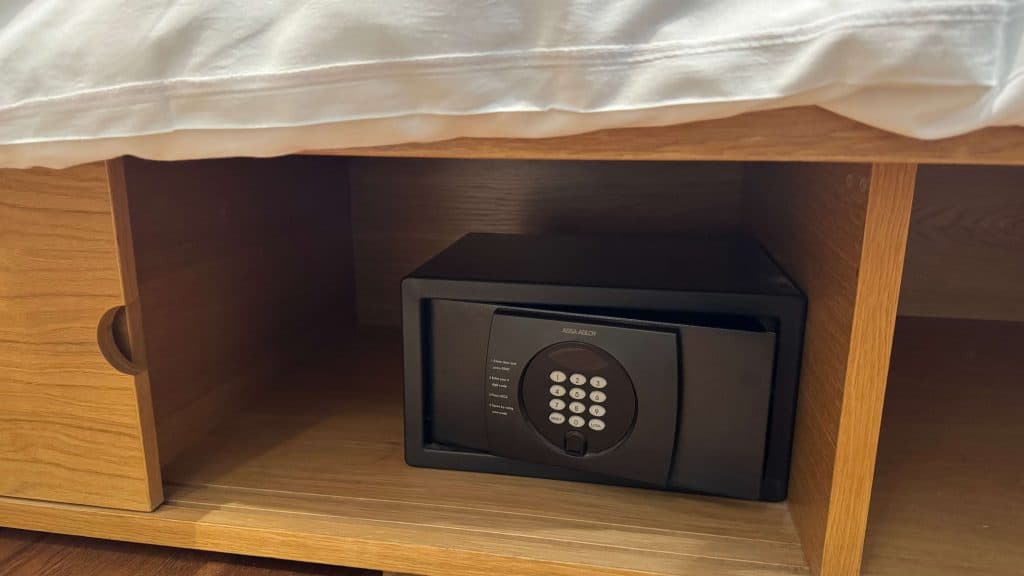
The result is a cleaner, calmer room.
It’s the same principle I try to follow at home with built-in storage wherever possible.
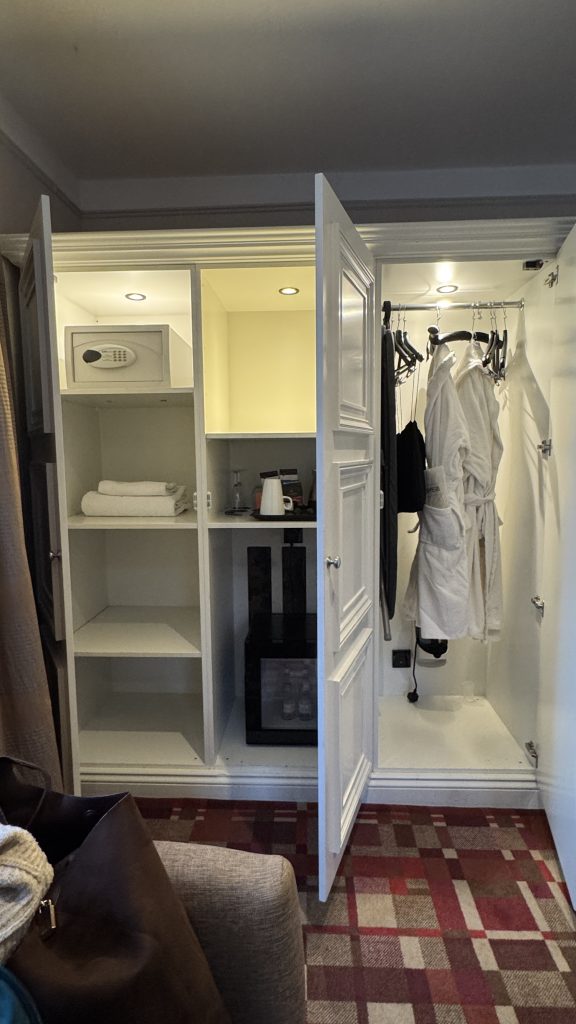
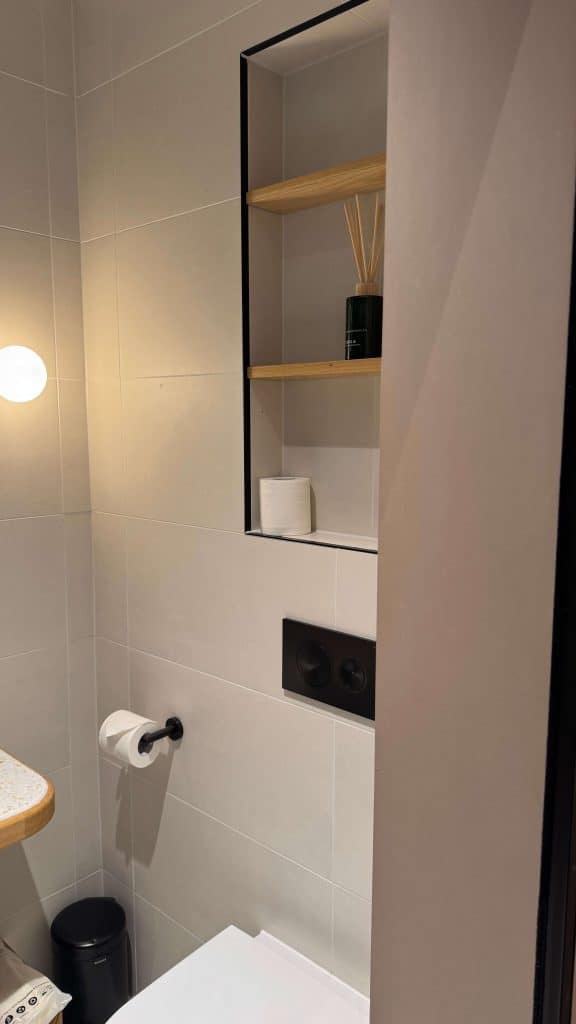
Small room design ideas I’ve started noticing in almost every good hotel
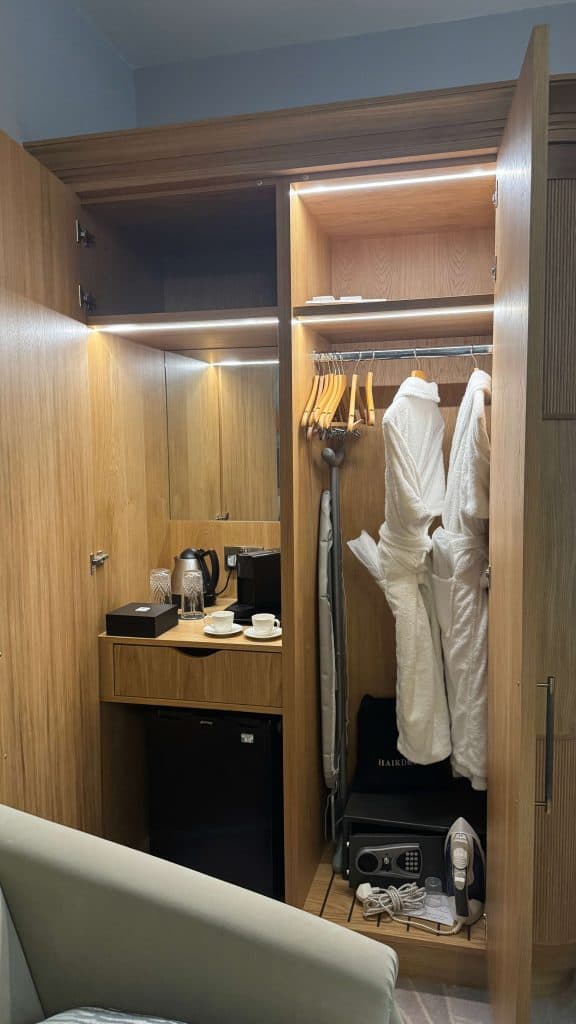
Whether I’ve been staying in London, Brighton, Lisbon or Rome, the same themes keep appearing:
- Less clutter
- Better lighting
- Thoughtful layouts
- Furniture that feels lighter
- Clever storage
- Natural materials
- Clear focal points
None of those things require a luxury hotel budget. In fact, most are completely achievable at home.
The next time you’re staying in a hotel, look beyond the breakfast buffet and the thread count. You might come home with more interiors inspiration than you expected. Right… I’m off to plan my next hotel trip – for research purposes obviously!!